
Our favorite late bloomers!

The Eugene team shares some of their favorite August-blooming trees and plants
By late August, most of our trees have gone to seed. But we have a few favorite late summer bloomers for you to sniff around for!
“It’s important to have flowers available to native pollinators,” says Eugene Director Erik Burke. “There’s not a lot of forage for pollinators this time of year. Having trees flower at different times gives them their best chance of getting the nectar they need.”
An especially charismatic tree this time of year is the Harlequin glorybower. It’s a cool name for a cool tree. Its pink and blue flowers look like something out of a Tim Burton movie, and they have a delicious smell. Speaking of delicious, the leaves smell like peanut butter!
While the Harlequin glorybower is appealing in many ways, this ornamental tree is not particularly climate resilient.
“We love some trees for their toughness,” Erik says. “We appreciate others just because they’re really cool. And that’s okay.”
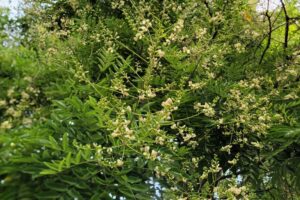
A tree that’s flowering right now and is a great drought tolerant option: the Japanese pagoda tree. This medium-sized tree has beautiful white flowers, and because it does well in poorly drained soils, it’s a good choice for Eugene.
The Chaste tree, named for its historic use as an anaphrodisiac, is blooming this time of year, too. It has really charismatic flowers that pollinators really love! Pollinator advocates are always encouraging people to plant more of this one.
Trees aren’t the only ones with some flowers popping this time of year. There are some amazing native plants like goldenrod and milkweed that are feeding the pollinators. Asters, too, are starting to bloom, and they’ll stay in bloom for several months!
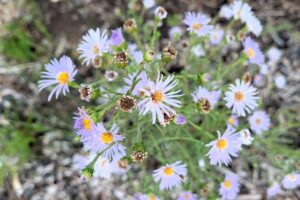
“Some consider Douglas’ aster the absolute best pollinator plant in this area,” Erik says.
Even if we’re not planting right now, there’s never a bad time to consider what you might want to plant in the future. So take note of what trees are flowering in August, so that you might do your part to help our native pollinators!