
Large, Evergreen, and Native Options for Your Yard
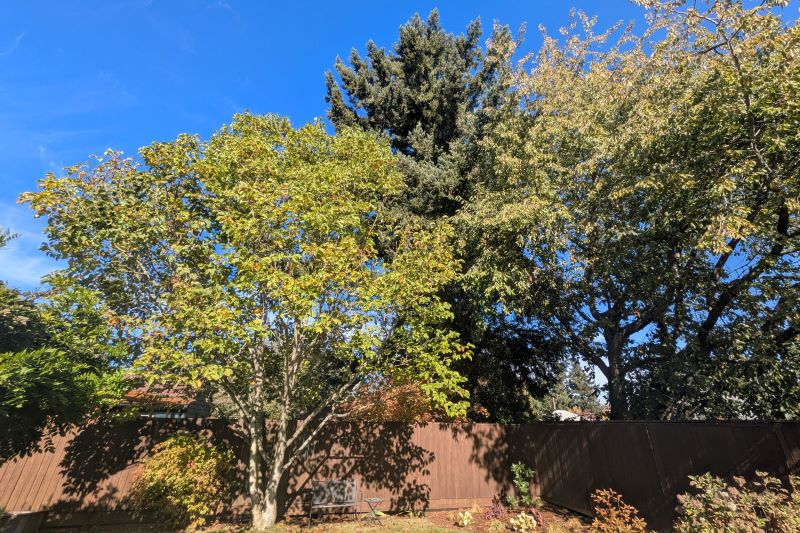
Do you have a yard that could use a tree? Maybe you want more summertime shade or to provide a home for local wildlife. There’s nothing quite like waking up to the sound of birds.
A big part of planting a tree is deciding where to put it. As residents, our greatest opportunity to add trees to our community is at our own homes. Friends of Trees plants a lot of trees along the street in right-of-way planting strips. More and more, we’re looking for people who are excited to plant trees in their yards. It’s a lot of untapped area for trees to grow, providing all their community benefits like clean air and water, wildlife habitat, cooler summer temperatures, and more.
We are especially excited to promote large, evergreen, and native trees, because each of those qualities can really maximize the benefits a tree provides.
Big trees provide more shade, more habitat, more carbon sequestration, stormwater filtration, and air pollution reduction. It takes a while for them to grow (and some longer than others), so the time to plant them is now!
Because they keep their leaves (or needles) year round, evergreen trees are always helping clean our air. Particulates in the air are caught by (and in some cases, absorbed into) leaves and needles, then wash away into the soil where they can be broken down into something less harmful.
And of course we love native trees! Native trees are excellent choices for providing bird and wildlife habitat, and they’re suited to our specific climate and conditions, making them relatively resilient and easy to care for. While a diverse, healthy urban canopy also includes non-native species, especially those adapted to the stresses of climate change and urban settings, native species have a special sense of belonging and cultural relevance in this place.
Our staff has compiled a list of some of their favorite large, evergreen, and native trees! Especially for our Portland plantings, where our partnership is prioritizing these species, we encourage you to consider choosing some of these awesome trees!
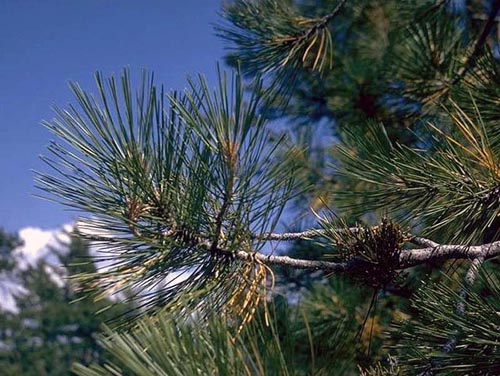
Willamette Valley Ponderosa Pine
Pinus ponderosa
Native to PNW | Easy to maintain | Valuable to wildlife | Drought tolerant | 90′ at maturity
Characteristics:
One of the most distinguishing features of the Ponderosa pine is its cinnamon-colored, puzzle-piece bark that smells like vanilla.This large native pine has long needles and medium-large cones. It’s a great drought-tolerant choice for windbreak or erosion control and a great wildlife tree that is popular with birds and squirrels.
Growing Conditions:
Ponderosa pine can grow well in hot, dry sites and can withstand very cold winters. It is adaptable to a variety of conditions but develops best in wet, deep, sandy gravel and clay loams. We make sure to source our ponderosa pines from the Willamette Valley subspecies, which is genetically adapted to this climate.

Douglas-Fir
Pseudotsuga menziesii
Native to PNW | Valuable to wildlife | 100′ at maturity
Characteristics:
Douglas-fir is a staple of Pacific Northwest forests, establishing well after fires and other disturbances. This large, fast-growing native conifer provides excellent shade. The cones, needles, and twigs of the Douglas-fir are an important food source for wildlife. This is the Oregon state tree.
Growing Conditions:
Prefers sun and moist, well-drained soils. Does best in deep moist sandy loams.
Note: We are currently sold out of Doug-firs, but are working to source more! Check back in to our online store if you don’t see them available.
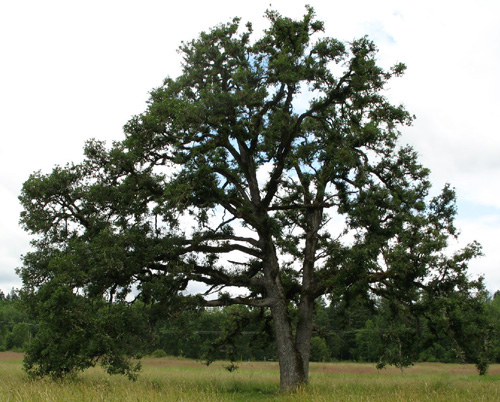
Oregon White Oak
Quercus garryana
Native to PNW | Easy to maintain | Valuable to wildlife | Drought tolerant | 50′ at maturity
Characteristics:
This large Pacific Northwest native oak has a beautiful form, broadly spreading with a rounded crown. Its glossy, dark green, round-lobed leaves turn in autumn to a golden brown, occasionally tinted yellow or red. Oregon White Oak is drought-tolerant and thrives in drier environments. It supports a multitude of wildlife species such as the acorn woodpecker, slender-billed white-breasted nuthatch, and Western gray squirrel, as well as hundreds of species of insects, including pollinators. Oregon white oak and its associated habitats, such as oak savanna and prairie, are part of a diminishing ecosystem that has been actively managed by Native Americans in our region for thousands of years.
Growing Conditions:
Slower-growing. A great summer shade tree for a sunny location. Can tolerate seasonal flooding but prefers drier soil in summer.

Incense-cedar
Calocedrus decurrens
Native to PNW | Easy to maintain | Valuable to wildlife | 50’ at maturity
Characteristics:
Named for its pleasant, spicy aroma, this medium-large conifer is actually in the cypress family and not a true cedar. A dense, columnar tree that does well in narrower spaces, it’s a great choice for screening and privacy. It has excellent wildlife benefits. Native Americans use the plant in traditional medicine, basket making, hunting bows, and for building materials.
Growing Conditions:
Incense-cedar is a great choice for drier sites. It is fire-resistant and drought-tolerant once established. Make sure to plant incense-cedars at least 15 feet apart to prevent overcrowding.
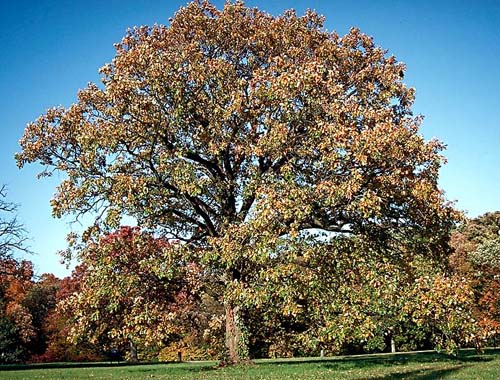
Bur Oak
Quercus macrocarpa
Valuable to wildlife | Drought tolerant | 60′ at maturity
Characteristics:
This magnificent, stately oak develops a large trunk and stout branches and makes for a great shade tree. Macrocarpa means large fruit, referring to this tree’s large acorns. Its dark green leaves resemble a fiddle in shape and have a lighter-colored underside that creates a subtle double-color effect in the breeze.
Growing Conditions:
Grows best in full sun to partial sun. Is tolerant of urban conditions including drought, pollution and poor soil.
Also consider: swamp white oak, pin oak, or any other oak. We love oaks!
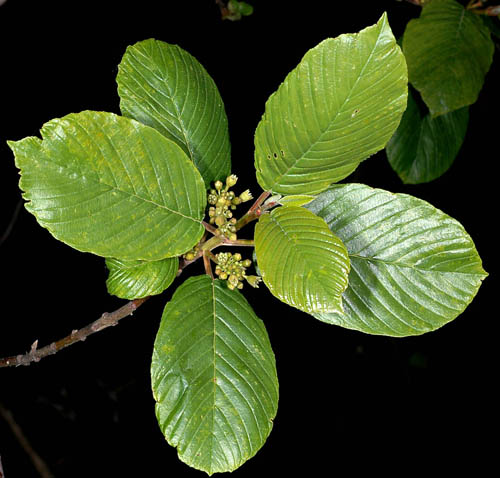
Cascara
Frangula purshiana
Native to PNW | Easy to maintain | Valuable to wildlife | 30′ at maturity.
Characteristics:
This small, deciduous native tree has graceful, sparse branching that holds umbrella-shaped clusters of small, green to yellow flowers in summer—a favorite nectar source for bumblebees. The tree’s elliptical green leaves become yellow, orange, red, or purple in fall, and its small berries attract birds and other wildlife. Its bark has important medicinal properties, including a powerful laxative effect, and is used by many native coastal tribes.
Growing Conditions:
Cascara grows best in shade or partial shade, and thrives in moist, well-drained soils. With our summers lasting longer and getting hotter, we recommend planting this tree where it is protected from west and/or south-facing sun. Young cascaras are showing signs of stress when they are planted in locations that receive all-day sun, especially at the hottest times of the day.
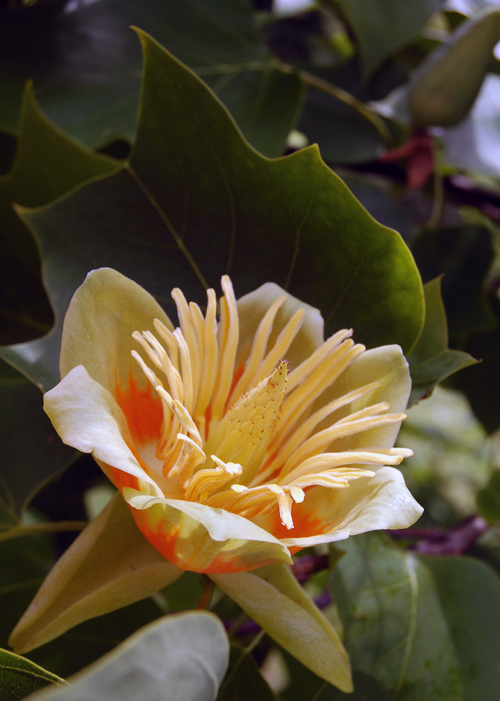
Tulip Tree
Liriodendron tulipifera
Interesting flowers | 80’ at maturity
Characteristics:
This magnificent, fast-growing deciduous tree has striped bark, unique leaves, and a stately form.. Its tulip-shaped flowers have yellow-green petals and an orange corolla. Its glossy, four-lobed leaves are bright green and turn yellow in fall. This is one of the most effective trees for filtering out air pollutants.
Growing Conditions:
Prefers partial shade when young and well-drained soil; best with summer water.
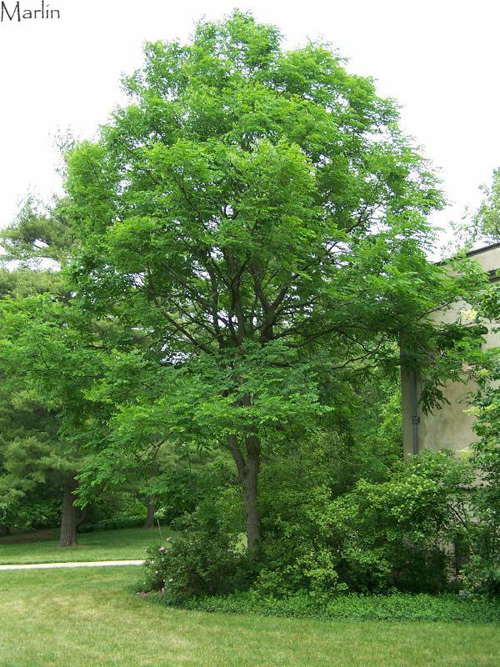
Espresso Kentucky Coffeetree
Gymnocladus dioicus ‘Espresso’
Interesting flowers | Easy to maintain | 50’ at maturity
Characteristics:
Medium to large open, round-crowned deciduous tree. This seedless cultivar exhibits an upward, arching form, and has attractive hanging clusters of fragrant white flowers in spring.
Growing Conditions:
Prefers full sun, humus-rich, moist soil, but adapts well to urban conditions. Tolerates drought and occasional flooding.