
We are Friends of Bulbs!
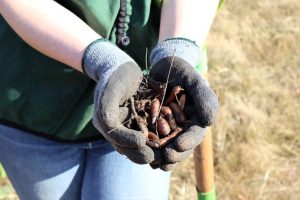
The Eugene Branch is giving away thousands of native bulbs!
Bulbs are amazing when you think about them. In the fall, you bury a little pod in your garden, and come spring it’s a beautiful flower.
“Bulbs are an underground storage organ,” says Eugene Director Erik Burke. “We’re really excited to give away thousands of them.”
On December 7th, Friends of Trees Eugene-Springfield will have a Native Bulb Giveaway event, giving away more than 10,000 native geophytes. Each person will be able to select up to 10 bulbs from a variety of native species including great camas, common camas, common milkweed, tiger lily, Wapato, Oregon checker mallow and more. Planting and care guides will be available for all attendees to take home with their new plants.
“We’re hoping people will have a lot of success with these,” Erik says.
“After they’re properly planted, they won’t need any watering, although a little the first year may help them establish.”
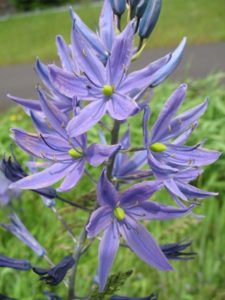
All of the species are native plants and culturally important plants, and most of them are edible! They’re great for pollinators and all have beautiful flowers, so anyone would be happy with them in their yard. We’ll be giving away mainly 3 year-old bulbs, which means they should all bloom in their first year, with the exception of camas, which may take another year.
“I like to call it a ‘geophyte giveaway,’” Erik says.
Bulbs, corms, tubers and rhizomes are all geophytes, which means they overwinter underground, using that underground storage system. A potato is an example of a root food or geophyte we are familiar with.
After seeding, these plants push all their energy into their bulbs (or corms or rhizomes) and shut down. They won’t rot in wet conditions, and can survive with little or no oxygen, making them a resilient capsule for the plant through winter. They often emerge from the ground relatively early, sometimes as early as the winter solstice or early January in the case of camas.
These plants spread really well, especially with the help of people, leading to the theory that they co-evolved with indigenous harvesting practices.
“These native plants evolved with human harvest and spread much better with human handling,” Erik says. For example, camas harvest increases camas patches by breaking off bulblets and knocking seeds into freshly disturbing soil. Harvesting also keeps the bulbs from pulling themselves too deep and the patch dying out. Camas patches really benefit from careful harvesting.
Thanks to our partners: Upper Willamette Soil and Water Conservation District and International Paper.