
Fall Tree Care Tips
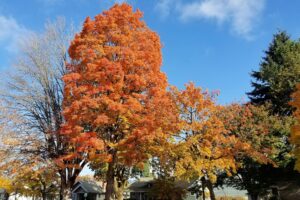
Steps to take to get your tree ready for the winter ahead
Enjoy what’s left of the fall color
Fall brings cooler days, longer nights, the return of rain, an extra layer or two when we head out, and the striking colors on display gifted to us by nature.
You’re not the only one who has felt the days getting shorter. Our trees noticed, too, and they’ve taken it as a sign that the growing season is over. How do they notice? A hormone response is triggered by the shorter daylight hours, the angle of the sun, and the cooler temps.
In a process called abscission, trees reabsorb the nutrients stored in the leaves before detaching and shedding them. Chlorophyll, which gives leaves their green color, is one of the first things to be absorbed, which is why we see them change color.

Leave the Leaves
Fallen leaves still have plenty of nutrients, which is why we encourage you to leave the leaves. Trees are putting those leaves there on purpose! We have a habit as a society to rake and dispose of leaves, but leaves are vitamins for plants and magic for building the health and vitality of soil, especially where urban soils are devoid of nutrients. Think of your leaves as free fertilizer!
You can use your leaves like mulch and rake them under your trees to nourish the roots (but keep them away from the trunk). Just like you would with mulch, follow the 3-3-3 rule: 3 inches away from the trunk, 3 inches deep, and at least a 3 foot radius. Covering the whole root zone is ideal, and the larger the tree, the wider the root zone.
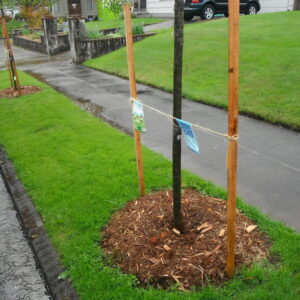
Mulch for winter
Roots can grow year round in the right conditions—moisture, air, and temperature. We plant when the trees are dormant above ground so that they can focus on establishing their roots. To help keep those conditions right for your young tree, make sure you replenish your mulch for winter.
Just like mulch keeps roots cool in summer, it keeps them warm in winter. And it will protect from the drying effects of winter winds. One inch of mulch is a windbreaker, three inches is like a down jacket. Just follow the 3-3-3 rule!

Prune potential hazards
It’s a good time of year to take care of maintenance of your medium and large trees. Last winter, we saw some serious winter storms. The best thing we can be doing this time of year to make our trees more storm resilient is pruning. The combination of wind and ice can lead to branch failure—in short, nature prunes itself. That’s exactly why it’s best to prune problem areas now rather than waiting until snow and ice is predicted. Ice can increase the weight load on a branch by up to 30 times.
Now is a great time to have an arborist out to inspect your trees!