
Pruning Leader Training
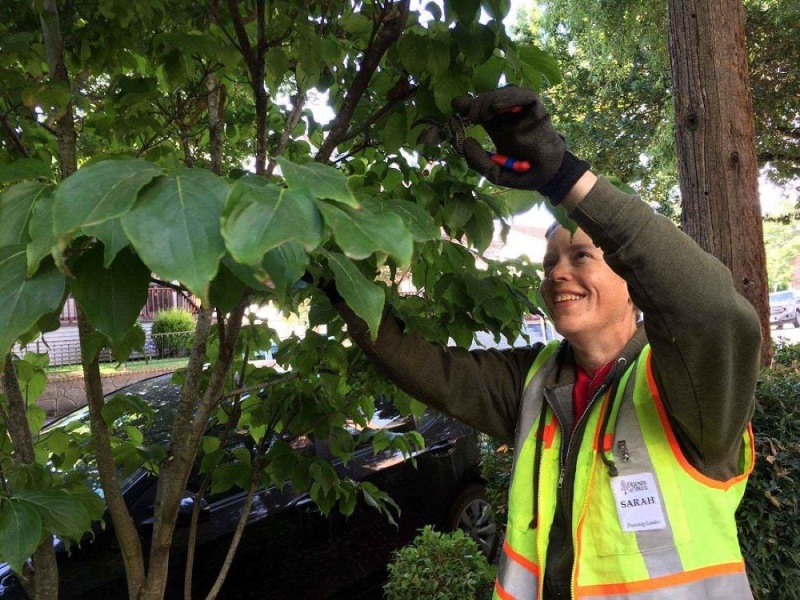
Are you curious about caring for city trees, and want to develop the art and skill of pruning? Pruning shade trees requires a bit of patience, curiosity, and training. If you’re looking for a way to make a long-lasting impact on the lifespan, health, and safety of trees in our neighborhoods, this role is for you!
“What’s the time commitment for this role?” 20 hours between now and March ’27, which includes: attending the Sat Sept 26th in-person training, and volunteering at 4+ pruning events this season (each event is 3-4 hrs). Pruning events are on Saturday mornings, Oct-March. You’ll be able to sign-up for your events following completion of the training.
“Where will pruning events happen?“ Portland, OR (5 events) and Vancouver, WA (2 events).
REGISTER HERE to save you place, space limited.
The training is Sat, Sept 26th, 8:45am-3pm (INSERT QUADRANT, map). FOT arborist staff and already trained Pruning Leaders who will be there ready to build your skills!
This training is offered only once this year; if you are unavailable for the date/time and interested in the Fall ‘27 training, please let us know.
Thank you for your interest! Any questions? Don’t hesitate to let us know: [email protected] / 503-595-0213
Pruning Leader Q&A
Why do people like being Pruning Leaders?
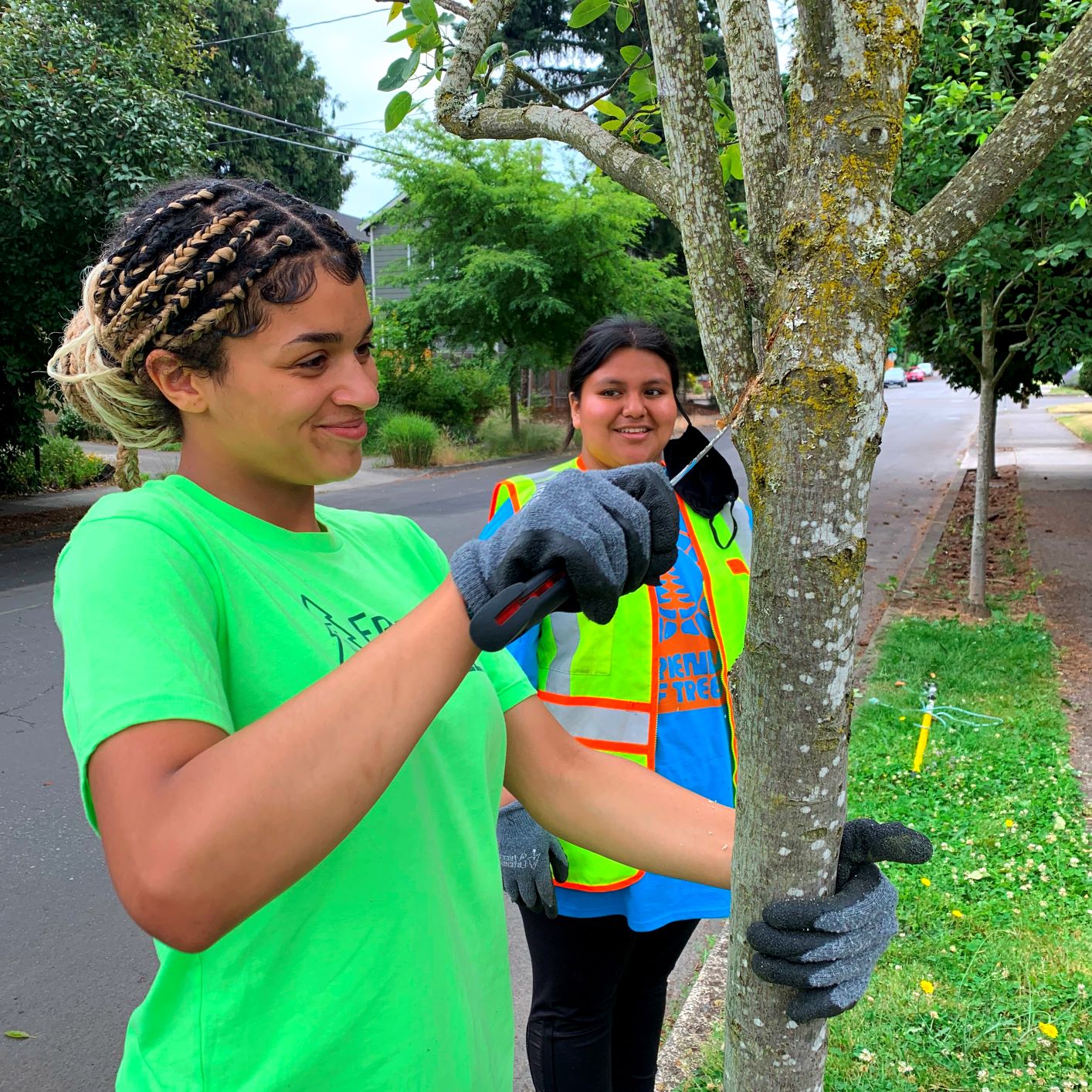
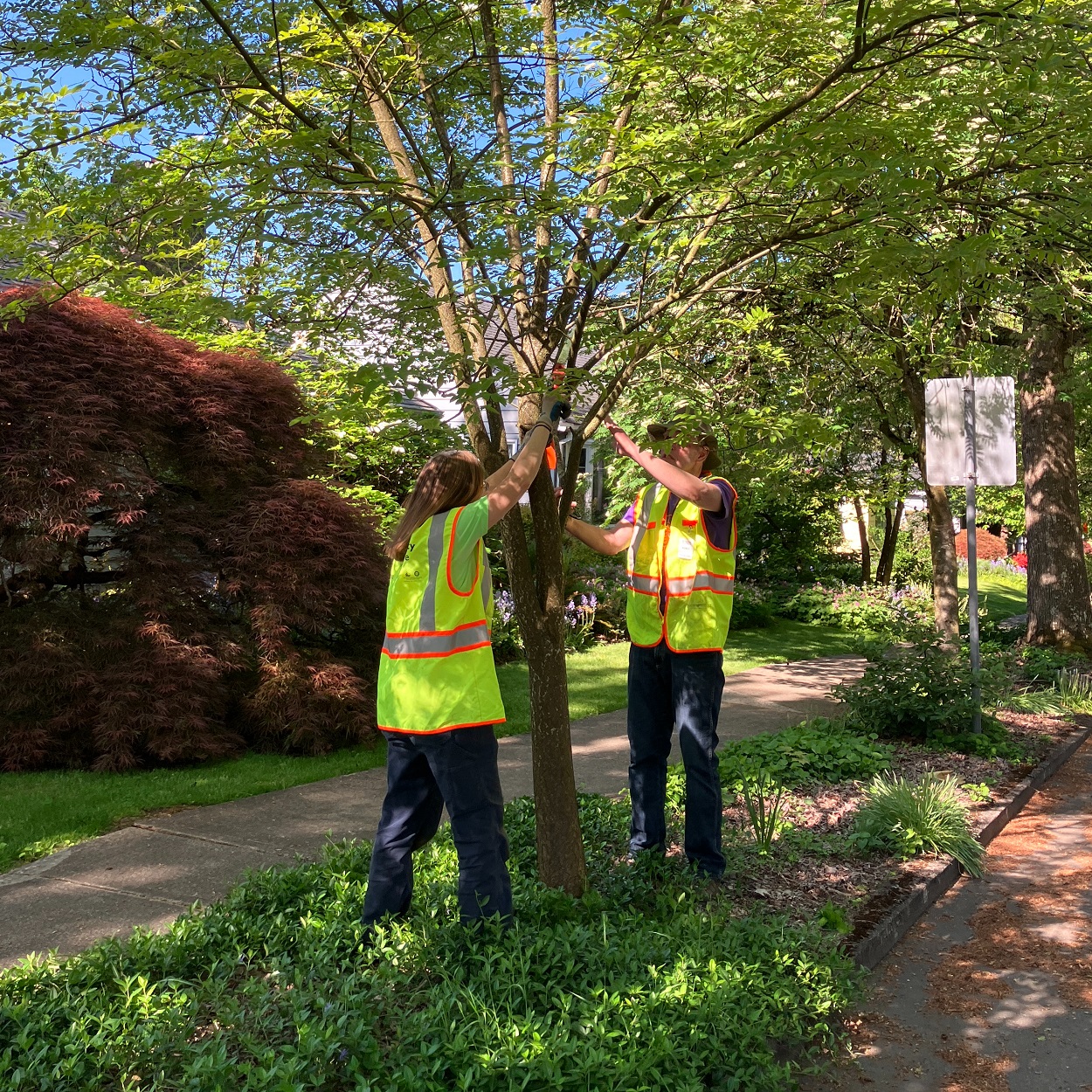
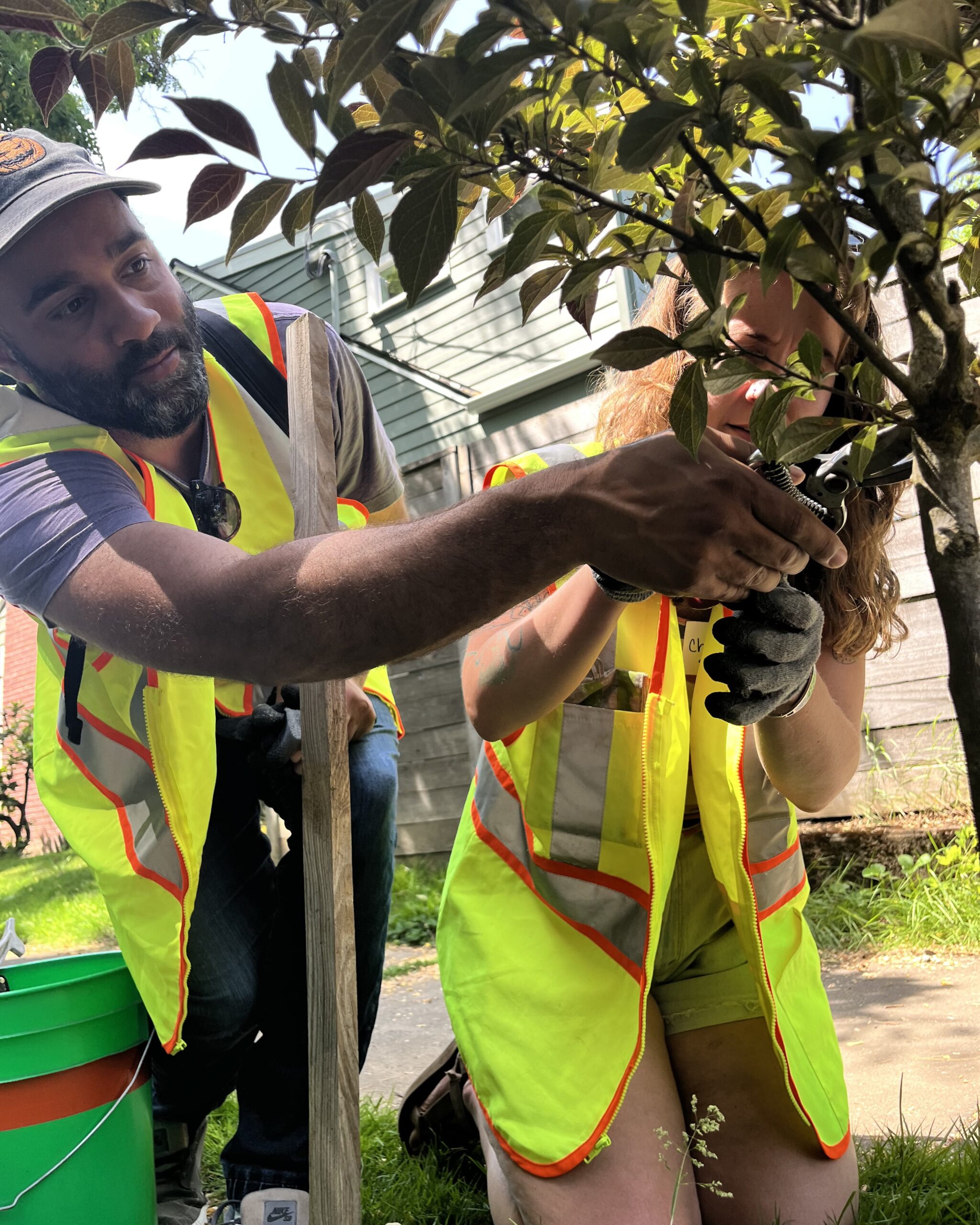
- At the pruning events, you’re typically in a small group of 2-4 other Pruning Leaders. At each tree, you exchange ideas and support each other on how best to make cuts. If you like to learn in a small group setting, you’ll find yourself rewarded in this role.
- This is a less physical role than tree planting. You won’t get as muddy in wet weather, or as sweaty on a warmer day. At a typical pruning event you’ll walk 1/4-1/2 mile, and assist with pruning 10-20 trees over 3-4 hours.
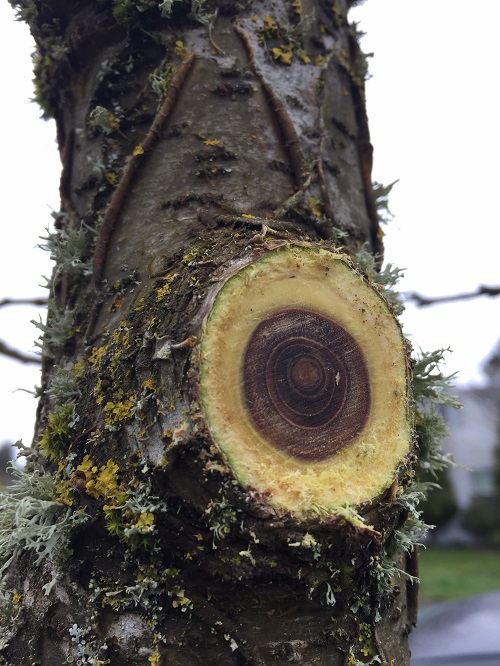
- Proper tree planting technique is rather rigid. Proper pruning technique is more flexible (and dare we say interesting?). There are multiple ‘right’ ways to prune young trees, and no two trees are alike.
- Uncertainty is part of the appeal. A good pruner works to help a tree within the hostile urban environment, for which the tree is not genetically adapted. Each tree will react to cuts slightly differently. Like Scott Baker says, we people need trees to be pruned in order to live together in the urban landscape.
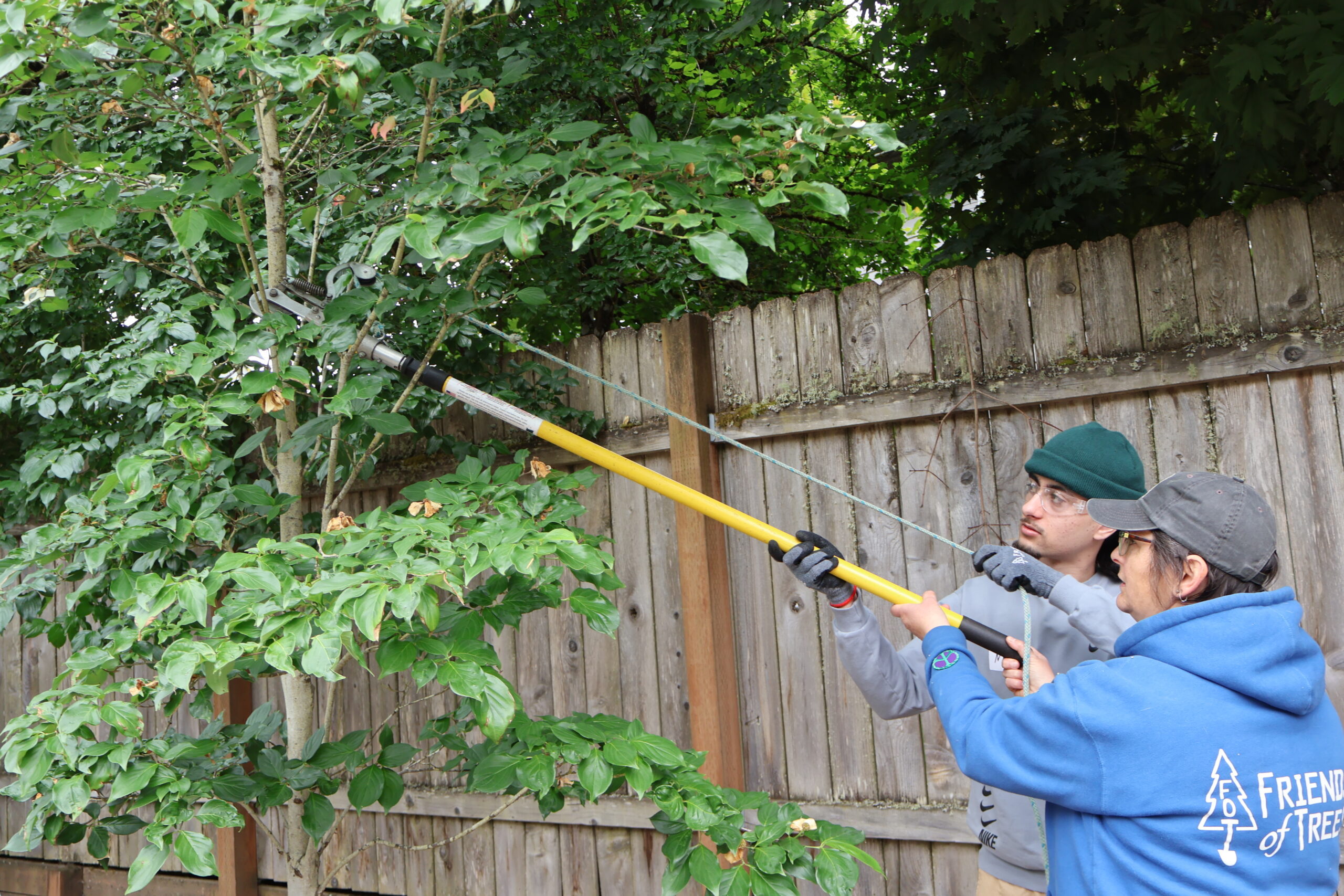
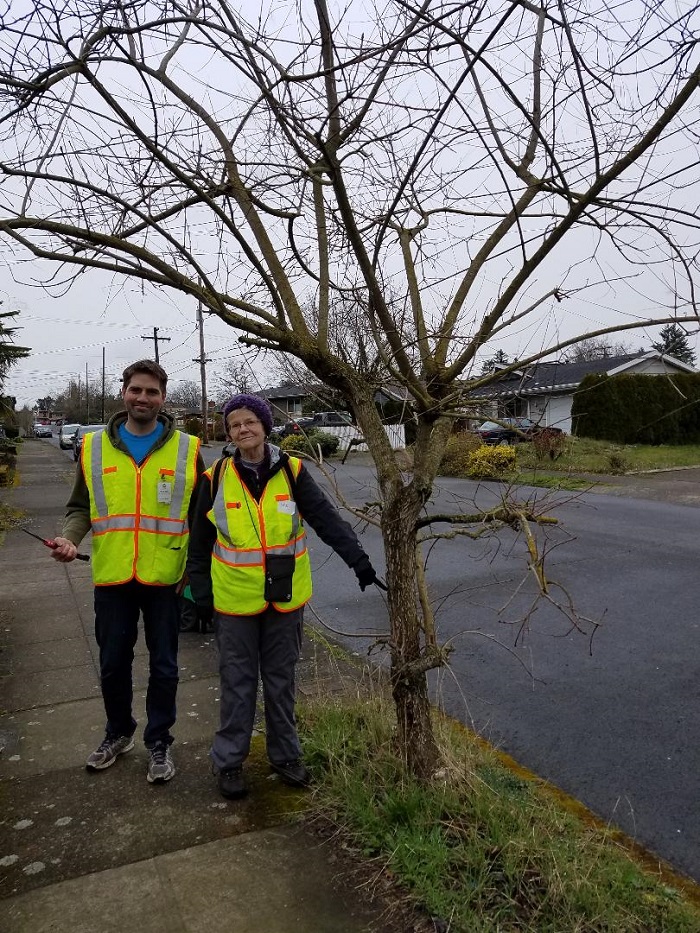
What sort of trees would I prune? Shade trees planted in the past 3-6 years that can be pruned from the ground using manual tools. We prune trees planted through FOT programming as well as any other trees in the right of way that meet ground pruning requirements.
Tell me again, why does this matter? Pruning a young street tree lengthens their lifespan in the urban environment. At scale, this improves the resilience and strength of the urban forest. Young tree pruning in particular “makes a 5-cent cut today to prevent the need for a $1000 cut in years to come”. Said another way, the pruning you’ll do mitigates the primary barrier to an environmental inequity: the high cost of maintaining street trees.
I’m active in another role at FOT. Are you shooing me out of that position?? No, not at all! We just wondered if it might be enticing to switch roles, or add pruning to what you already do with FOT.