
Tag: tree care during heat waves
Summer Tree Care in the Pacific Northwest
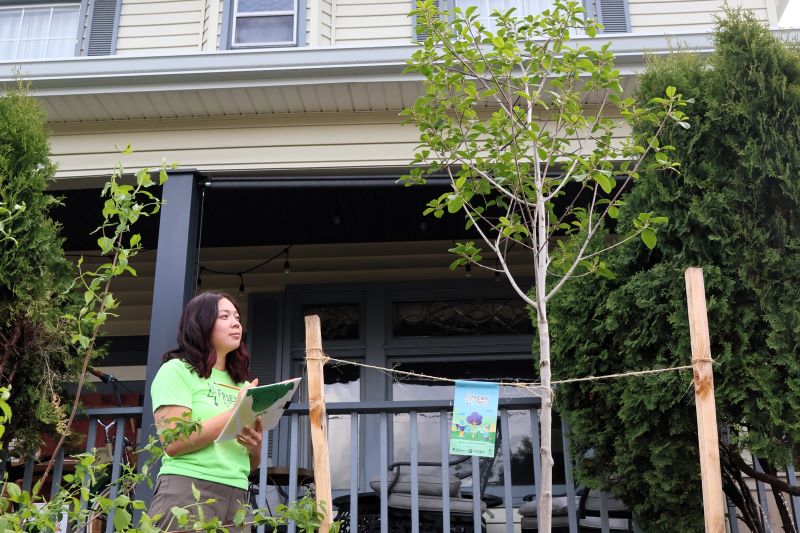
Summer sun is here! If you got a tree from us this past season, you can expect a Summer Tree Inspector to come by to see how your newly planted tree is faring if they haven’t already. Longer, hotter summers mean that even species native to this region are struggling to stay hydrated.
“Unlike in other areas of the country, like the East and the Southeast… we don’t get any rain during most of a tree’s growing season. And so as far as tree care at this time of year, I’m mostly thinking about watering.”
–Litzy Venturi, Community Tree Care Coordinator
Each summer, we try to visit every single tree that was planted during the prior planting season. Our volunteer inspectors are trained to check on these young trees to make sure they’re getting the care they need to make it through their first summer.
Here are some pointers from our Summer Tree Inspector Program for protecting your trees in the heat. You can always visit our Young Tree Care Guide if you have any questions.
- Water and mulch
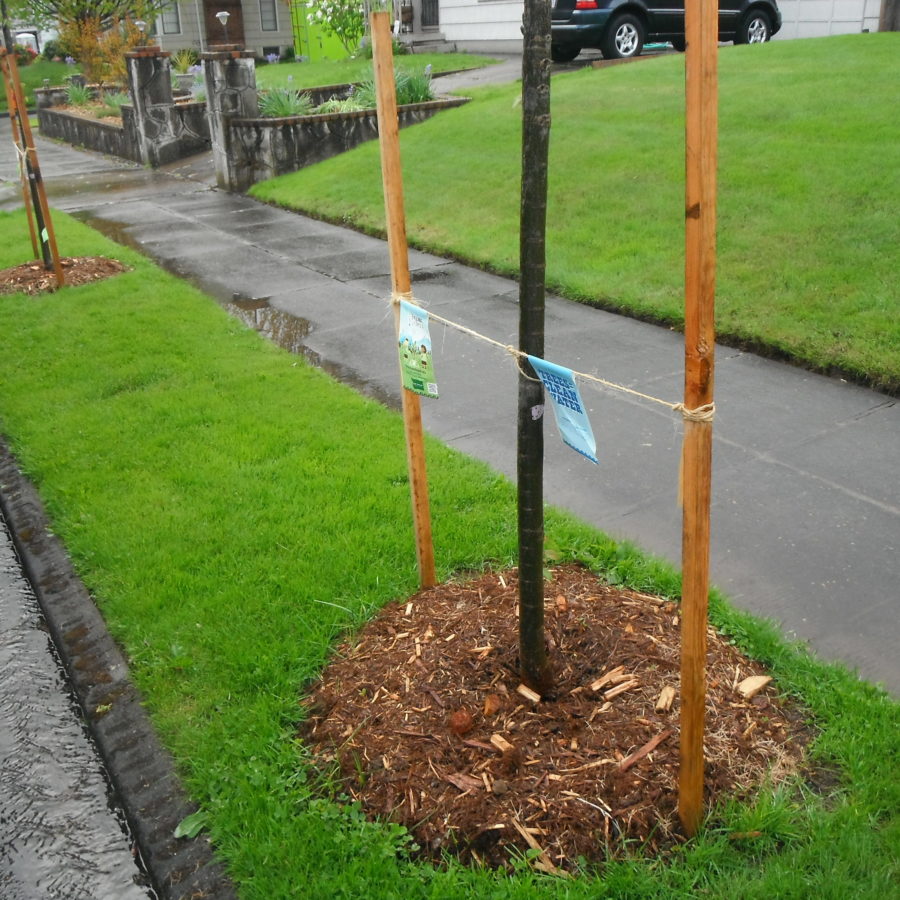
Trees depend on water to survive the heat. A protected environment that prevents evaporation is key, giving water an opportunity to go deep and be taken up by the roots. Here’s are some steps: - Create a mulch donut over the roots: Apply a three-inch layer of mulch over the root zone to prevent evaporation and help water reach a little deeper. Be sure to leave a three-inch gap of bare soil directly around the trunk; keeping the bark constantly wet creates an entry point for disease.
- Mulch helps keep weeds and grass down, which limits the need for using lawn mowers and string trimmers near the tree’s trunk. Recommend hand pulling weeds/grass. Significant bark damage can impact its ability take up water, and can ultimately shorten a tree’s life.

- Mulch helps keep weeds and grass down, which limits the need for using lawn mowers and string trimmers near the tree’s trunk. Recommend hand pulling weeds/grass. Significant bark damage can impact its ability take up water, and can ultimately shorten a tree’s life.
- Water when it is cool: Early morning or late evening is best. Watering during the heat of the day causes the water to evaporate before it can reach the tree’s roots.
- Water deeply and cyclically, 15-20 gallons once per week:
1) Watering bags: Zip a green Gator slow-release bag around the trunk (or place it next to it if it doesn’t fit) and fill it once or twice a week.
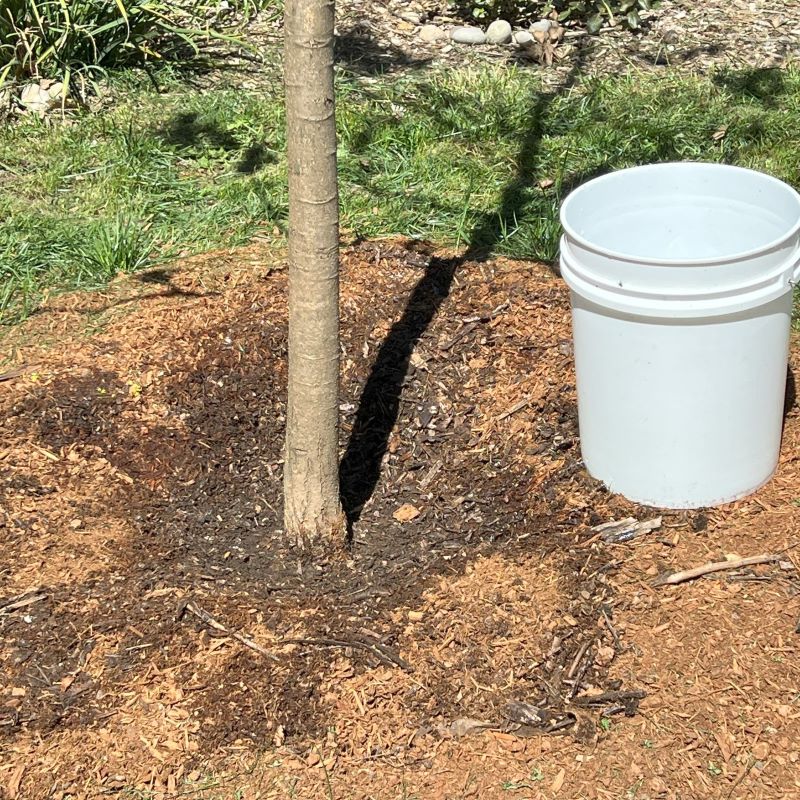
2) DIY a 5-gallon bucket: Drill a 1/8-inch hole near the bottom of a plastic bucket, set it by the roots, and fill.
3) A trickling hose: Set your garden hose to a gentle trickle right over the root zone for about 30 minutes.
As you water, you’ll start to get a dialogue going with your tree about how it handles the heat and you’ll notice how the soil is reacting too. Every tree is different. Here are some ways to observe and improve as you go:
- Get a feel for soil moisture: You can push a pencil about two inches deep to see if the water is making its way into the ground near your tree’s roots. If it comes out clean, this is a sure sign your soil is too dry.
- Trees can get overwatered, especially if a tree is being watered in addition to receiving water from daily lawn irrigation. While grass takes up a lot of the water, the soil around the tree’s roots, especially when it’s young, can end up with more water than the tree can take up with its limited roots. This can kill the tree
- Widen the watering area: You can move your watering zone a few inches farther out from the trunk each summer. This encourages roots to grow away from the trunk, which assists with anchoring and better water absorption and nutrient uptake.
- If you can’t water: If you go out of town or otherwise leave without watering for a while, your tree might look completely parched when you get back. Compensating with too much watering without letting soil breathe can lead to rot. It is better to give your tree one deep soaking to reset the soil and then return to a regular weekly watering.
- Build up the soil: You can put down a layer of mulch every year to replenish the donut. As it breaks down over time it feeds the tree and creates well aerated soil. Also, a wide mulch ring can help lawnmowers and weed-whackers to keep a safe distance.
“Over the course of decades, if everybody mulched their yards, we could change the city’s soil structure to be much more amenable to microorganisms and plant roots.”
–Litzy Venturi, Community Tree Care Coordinator

Look Out for heatwaves
Keep an eye on the forecast and act before the heat hits. While temperatures above 85°F are stressful for trees, you should start taking precautions as soon as the forecast nears 80°F. Also, trees in direct sun or near concrete and asphalt are especially vulnerable, as those spots get much hotter than the official forecast.
- Pre-water: Soak the ground two days before a heatwave arrives. This gives moisture time to sink deep into the soil.
- Remove competition: Surrounding lawn grass and plants will compete for every drop of water. Keep the tree’s root zone weeded, and you can put friendly companion plants just outside the tree’s canopy.
- Increase water during heatwaves: Water 10 gallons per inch of trunk diameter, three times weekly during heatwaves.
- Pay special attention to vulnerable trees: Trees with thick, waxy leaves (like white oaks or tupelos) naturally handle heat better. Trees with delicate leaves (like vine maples) will scorch much easier. Make sure these trees don’t get missed, and get extra watering.
More resources
When looking for accurate tree care information, you can check out Western-specific resources that account for dry summer climates like ours:
- Friends of Trees
- University Extension Offices and State Departments of Forestry (e.g., Oregon Department of Forestry)
- International Society of Arboriculture (ISA)
Tree care during extreme heat waves
It’s hot out there! In our service area and around the world we are experiencing unprecedented weather events as a result of climate change, including a recent heat dome with multiple triple-digit days. Here are some helpful tips to help your new trees weather the heat!
In general trees in our area need water from April to October, depending on weather. As you may know, extended hot, dry weather can place a great deal of stress on trees. Fortunately, just a little extra care will provide your trees the relief they need to minimize drought stress and keep them healthy. Follow these simple steps to ensure your new trees have the support they need:
Established trees: Give them a monthly soak, perhaps an hour on a drip line, or more if the tree appears stressed (e.g., dropping leaves).
New trees (in the ground 1-3 years):
WATER: During an excessive heat event, we recommend that you double your normal watering routine. This means that your new trees should receive 15 gallons of water at least twice a week throughout the heat wave, meaning a deep watering every three to four days when it’s about 90-degrees or more for an extended period.
The best time to water is in the early morning or after the sun goes down to minimize water loss to evaporation. Water slowly so that moisture soaks deeply into the soil and doesn’t run away from the root zone. This can be achieved using one of the following methods:
- A slow-release watering bag
- A DIY 5-gallon bucket drip system (check it out in the video above)
- Trickle your hose within the root zone for 15-20 minutes
Be mindful that it is possible to overwater your trees as well (though unlikely during the Portland region’s dry summers, overwatering is more common when folks water trees in winter. Allowing the soil to completely dry out—or allowing it to stay soggy—will result in a tree that is stressed. Deep, infrequent watering is the way to go: Water deeply, then hold off. Healthy roots follow the water downward as it starts to dry and establish sinker roots for increased drought tolerance. Keeping the soil consistently moist through deep and infrequent watering is essential to healthy trees. Wondering if it’s time to water? If you poke a pencil 4-5 inches down, does it come out dry & dusty? If so, water!
MULCH: Organic mulch is a highly effective way to keep the soil from drying out quickly, especially during excessive heat. A thick layer of mulch from wood chips and ground leaves is even better: Wood is essentially carbon and carbon is nature’s sponge, and leaves are like vitamins that are taken into the roots and are water-soluble. What we offer at the FOT Portland office is ground up branches and leaves combined, just like what’s found on the floor of a healthy forest.
“I like to remind folks that the forest floor is perfectly mulched and your street tree should be, too!” Andrew Land, Neighborhood Trees Senior Specialist
Mulch around the base of the tree will help to retain soil moisture and regulate soil temperature, which is exactly what roots need to grow. Apply mulch for a newly planted street tree using the 3-3-3 rule: mulch should be at least 3″ deep, 3′ in diameter, and pulled at least 3″ from the base of the trunk. If your tree is beyond that first year, you can extend that mulch further because our objective is to mulch the tips of the roots as they grow outward from the trunk. Three-inches thick is also important because it’s insulation (imagine the difference between a wind-breaker and a down jacket, for example: that dead air space matters.)
PRUNING: Generally it is safe to prune most trees in mid-summer, from roughly mid-July to mid-August to be more specific. However, you may want to pause pruning during an extreme heat event, including right before and right after an extreme event, so consult the weather forecast as part of your pruning plan. Check out our pruning page for lots of useful information, including how-tos.
For additional tree care tips, check out our Tree Care Guide. Stay safe, stay cool, and as always, please don’t hesitate to reach out with any questions. Go trees!