
Tag: leaves
Spring Splendor
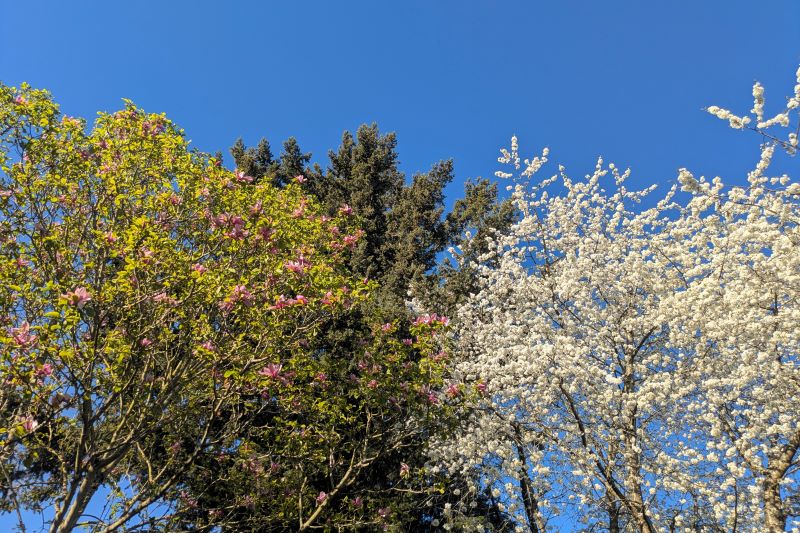
How can you not be romantic about fresh leaves and flowers?
We’ve got a hot-button question for you: Does the spring leaf-out compete with fall color when it comes to visual splendor? Eugene Director Erik Burke thinks so.
“When trees are one-third leafed out and have that fresh yellow-green, they’re so full of life and vibrancy,” Erik says. “And trees leaf out at different times, so you have trees and all these different stages. For me, it’s equivalent to fall color.”
The days are getting longer and warmer, the trees and plants are waking up—these are the signs of spring that make it such an exciting time.
“This time of year people seem to really remember their trees and we get a lot of calls,” says Eugene-Springfield Program Manager Taylor Glass. “We get people wanting to plant trees but also worried that their tree might be dead. We tell them to wait a little bit longer because some trees are late bloomers (or late leafers!).”
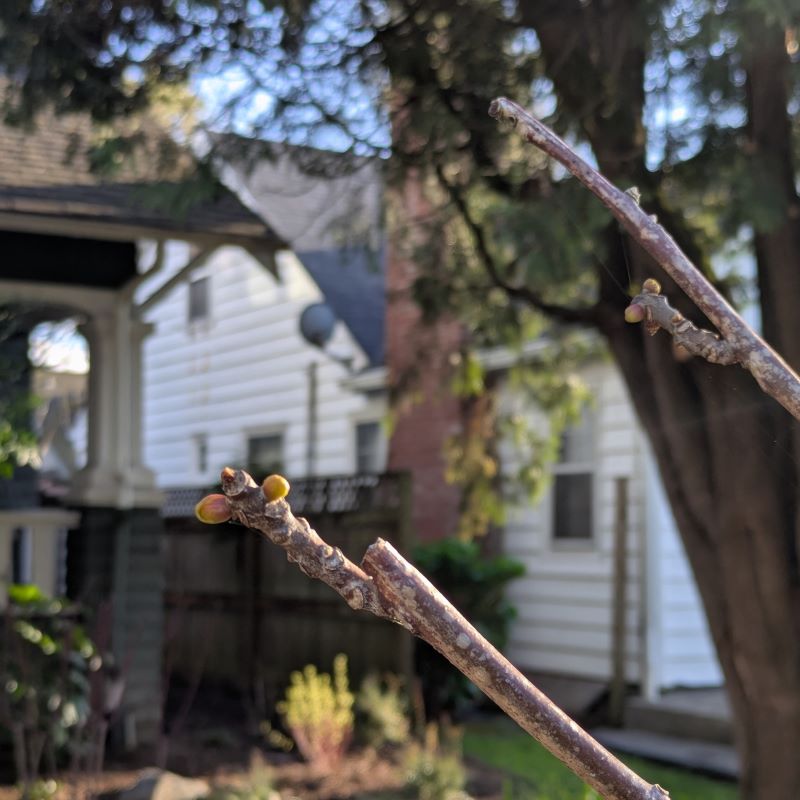
Some trees like Oregon white oaks, Kentucky coffeetrees, and crepe myrtles don’t leaf out until later in the spring, which can be a bit worrying when their neighbors are fully leafed out already. Each species responds to its own set of parameters as to when to leave dormancy based on daylight, temperature and angle of the Sun.
“I really love the leaves that ginkgos put out,” Taylor says. “They’re tiny versions of the full grown leaf. They’re so cute!”
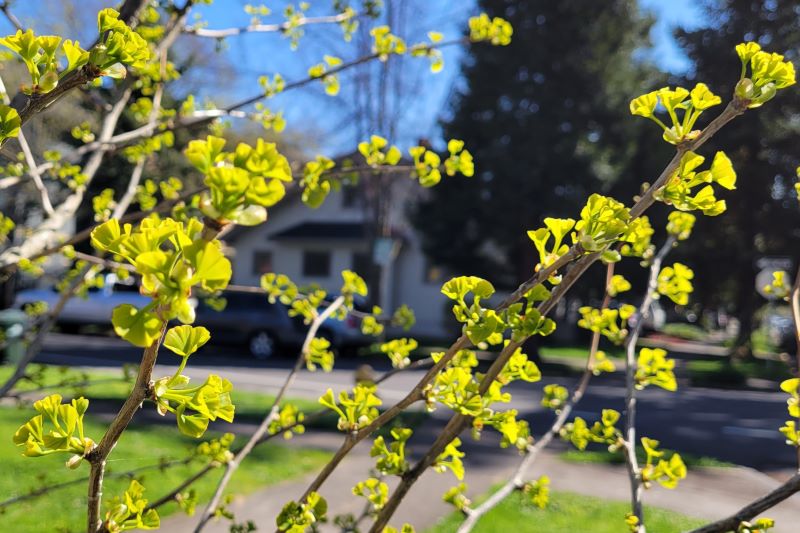
Trees take the energy that’s been stored in their trunk and roots and send it out to make leaves and grow buds. Some trees like magnolias and some maples will even put out their flowers before their leaves.
“We have a long spring ecologically,” Erik says. “It begins with the first osoberry bloom in early to mid-February.”
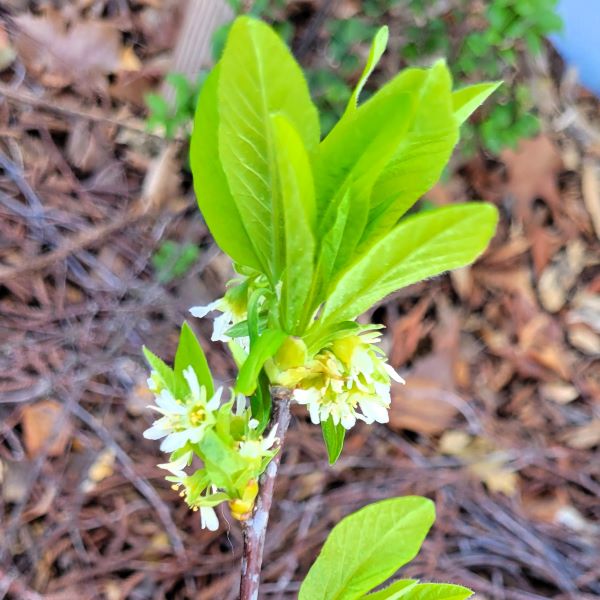
Just like with our own sleep cycles, there are benefits to rising early or sleeping in. Some native trees like California buckeye, Western redbud and Oregon Ash leaf out early, taking advantage of water in the soil for their growth pulse. These trees often will enter dormancy early, too, in the middle of summer drought, and will throw off their leaves as early as August.
Having trees flower in different stages is great for pollinators so that they have steady food sources throughout spring and summer. The Chinese scholar tree will be in full bloom in August or September when pollinators don’t have much else.
Friends of Trees stops planting trees during the summer months so that we can plant trees while they’re dormant, giving time for their roots to establish before they need to put their energy toward growing leaves. But spring and summer is the best time to think about what tree you want to plant, both for the conditions at the planting site and for the spring splendor you want to enjoy.
A Leaflet on Leaflets
If you’ve ever gone on a tree walk with Eugene Director Erik Burke, you’ve heard about some of the nuanced differences among trees that you can study to identify them. One iconic characteristic is always a good starting point: the leaf. Summer is a great time to investigate the myriad shapes that leaves take.
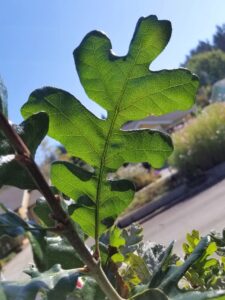
But what exactly comprises a single leaf? A tricky aspect of plant morphology is understanding simple leaves versus compound leaves. A simple leaf is a singular leaf connected by its stem, or petiole, to the branch (like the Oregon white Oak pictured above).
Sometimes what you might think is an entire leaf is actually a leaflet on a compound leaf. Leaflets will all be attached to the main petiole, which is connected to the branch. How can you tell the difference? Look for the bud node, which will appear where the stem connects to the branch, but not where a leaflet connects to the stem.
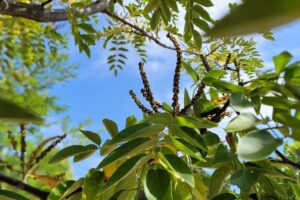
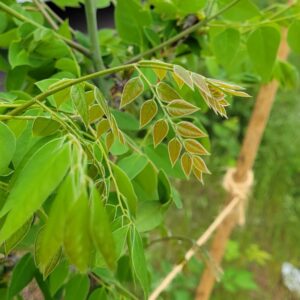
Some compound-leaved trees include golden rain tree, red horsechestnut, yellowwood, Amur maackia (pictured above), and Kentucky coffee tree (pictured below). The Kentucky coffee tree has double compound leaves. That means that their leaflets have leaflets. Their leaflet branches can have 40 leaflets!
Some other common trees that folks may know that have compound leaves include ashes, buckeyes, locusts, walnuts, and the infamous tree of heaven. Becca and Erik in the Eugene office sometimes compete at events for who can find the tree of heaven leaf with the most leaflets. Becca currently has the record with 49.
One of the best times to get up close and personal with a tree’s leaves is when you’re pruning. Our Eugene-Springfield team is hosting community printing events August through October. Details here.
Ready to take a (video) ride on a street sweeper?

City of Portland street sweepers are out in force cleaning leaves from streets each fall. Recently Friends of Trees Program Director Brighton West was invited to take a ride in one of the sweepers. What did he learn?
First, the driver can ride on either side of the sweeper. It’s equipped with steering wheel and pedals on both sides. Second, it’s a loud and bumpy ride.
How can your community group help seniors this fall?

By Brighton West
Are you part of a community group looking for a project?
Friends of Trees would like to invite you to help rake leaves for elderly residents between November 10 and 13. The Portland Leaf Harvest is encouraging individuals and groups to help with fall yard work. Last year, Home Depot volunteers partnered with Friends of Trees and Loaves & Fishes to rake for 30 homebound seniors. This year we want to help enable other groups to do the same thing.