
Tag: emerald ash borer
Our Eugene Team Talks EAB
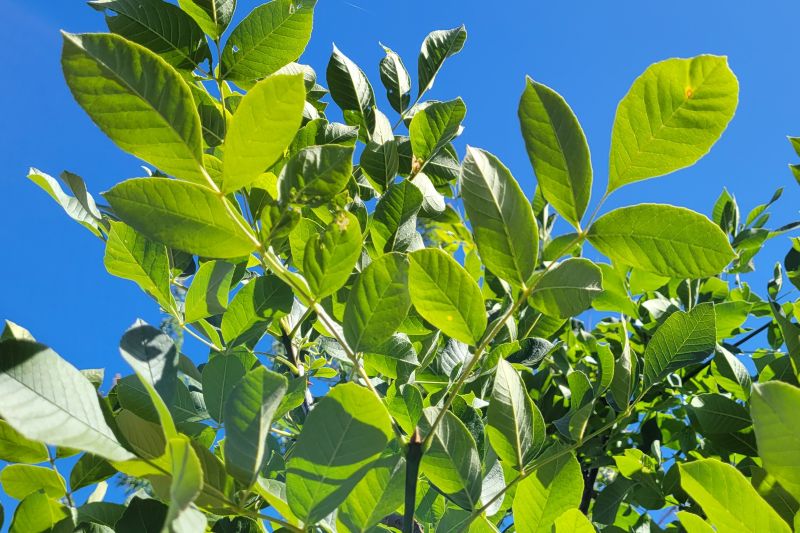
When it comes to Emerald Ash Borer, we’re finding hope in the gloom
The discovery of the emerald ash borer in Oregon has many people rightfully worried about the fate of ash trees in our region. The emerald ash borer, or EAB, is an invasive wood boring beetle that feeds on ash trees. There are thousands of wood boring beetles in the world, and most cause no problems at all, but EAB isn’t native to North America, where it has fewer natural predators and the ash trees have no natural defenses.
EAB was first detected in our area near Forest Grove in 2022 and has been found as far south as Silverton. The amount of time that it takes for a healthy ash tree to die from EAB is 3-5 years, which is why we are seeing some of the first trees in active decline right now.
“There’s an overwhelming sense of doom and gloom around this subject,” says Eugene Director Erik Burke. “But I believe we’ll be planting EAB-resistant Oregon ash within 20 years.”
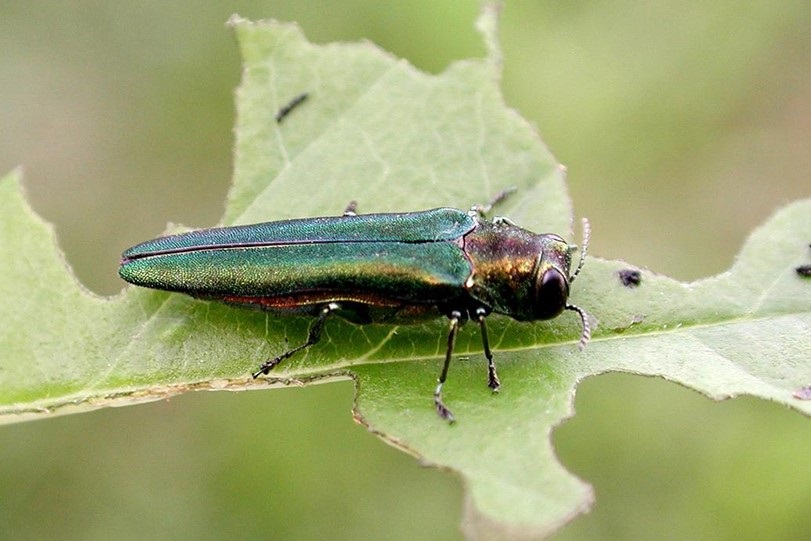
Erik understands why people are worried that some ash species might go extinct if they are completely wiped out. In addition to the loss of mature trees in our cities, another key issue is the danger to arborists who will be doing removals, as trees become brittle after infestation. In natural areas, primary concerns are losing critical shading for streams and likely pulses of invasive species with a sudden loss of shade.
But Erik points out that EAB often doesn’t kill ash completely, it kills the tree to the ground, and then rootsprouts grow, forming a multi-stemmed shrub. In the eastern US, some stands have been killed to the ground, and begun to grow back multiple times. So while the species may not be able to grow to full size trees, there will still be existing plants, giving more opportunities for a resistant strain to be found.
Oregon Department of Forestry and U.S. Forest Service have been very proactive in collecting seeds across the genetic range to save and use to help find resistance. “In general, the response in Oregon has been really strong,” Erik says. “Proactive management decisions might mean that Oregon suffers less than other states have.”
Even with hope for the future, there are still huge consequences of EAB’s arrival. One of the biggest concerns is that many ashes grow along streams, and help keep the water cool and healthy. Planting replacement trees along streams is one of the most important steps toward maintaining water quality and wildlife habitat.
Some things concerned citizens can do is to make a plan for their site or property if it has ash.
- Report potential sightings of EAB.
- Consider getting trained to identify EAB and helping find it when it arrives so it can be addressed quickly.
- Remember, the cause of EAB and most invasive species is buying nonlocal goods, so consider buying local wherever possible. If you burn firewood, be sure not to transport it or purchase it from other areas.
- Support reintroduction and restoration of native prairies and their associated prescribed and cultural fire, which focuses on controlling ash in natural areas.
- Consider replanting trees now if you have ash, and prune or remove trees to be sure the replacement trees have enough light. Here’s a key article on what to replant with on private land.
- Support Friends of Trees and your local city urban forestry program.
- Help scout for EAB when it starts to arrive and help scout for resistance once it arrives.
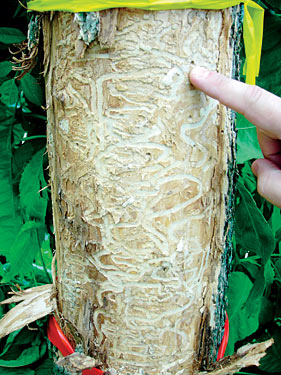
The question in urban areas many homeowners will face is: to inject or not to inject? Ash trees can be injected with an insecticide, Emamectin benzoate, that will circulate throughout the tree and prevent infection for 1.5-3 years. The downside is that it doesn’t only kill EAB; It will also kill many of the other insects that live in or on the tree, like aphids, lacewings, and moth larvae. So many people will face the choice of losing an old friend tree that is providing shade and other benefits, or injecting and losing much of the life within the tree.
“The urban and rural responses will need to be different,” Erik says. “Injection makes a lot more sense in cities, protecting the most valuable trees to buy time for replacement planting, and eventually removal.” Once a tree becomes infected with EAB, it becomes very brittle and dangerous to climb, making removal extremely difficult and costly.
“There are a lot of tradeoffs with managing this crisis. And there are a lot of unknowns. But we’ve developed disease resistance for other species like sugar pine and Port Orford cedar, and we will for ash as well. Local arborists have found resistance to bronze birch borer. Oregon ash will not go extinct.”
On June 26th, Erik participated in a talk on how to be prepared for emerald ash borer hosted by the Eugene City Club, alongside Jeff Chandler, owner of Chandler’s Tree Service, and Alby Thoumsin of Sperry Tree Care. You can watch it in full here!
Friends of Trees will be hosting a series of tree walks meeting in ash groves around Eugene and Springfield. These walks will feature guest speakers from City of Eugene, ODF and others, and hopefully will generate attention and interest in positive responses to EAB. You can find information on upcoming EAB tree walks on the Eugene calendar page here.