

Congratulations on planting a new tree!


Watering
Trees need to be watered weekly during their first five summers after planting to survive. Throughout the summer and during other dry spells, water newly planted trees (1-3 years after planting) with 15 gallons of water on one day each week and trees 4-10 years after planting with 20-25 gallons each week.
A dry spell can be characterized by two to three weeks without significant rainfall in the summer or winter. During hot periods, when we reach more than 85°F three days in a row, add a second weekly watering to your routine. Spring and fall are transitional seasons and it can be hard to know if your tree is getting enough water. The best thing you can do is check the soil by putting a stick or a pencil a few inches down and seeing if it comes up dry. When it starts raining in the fall, it will take a lot of rain to fully soak through, so don’t necessarily stop watering your tree after the first rain shower of the season.
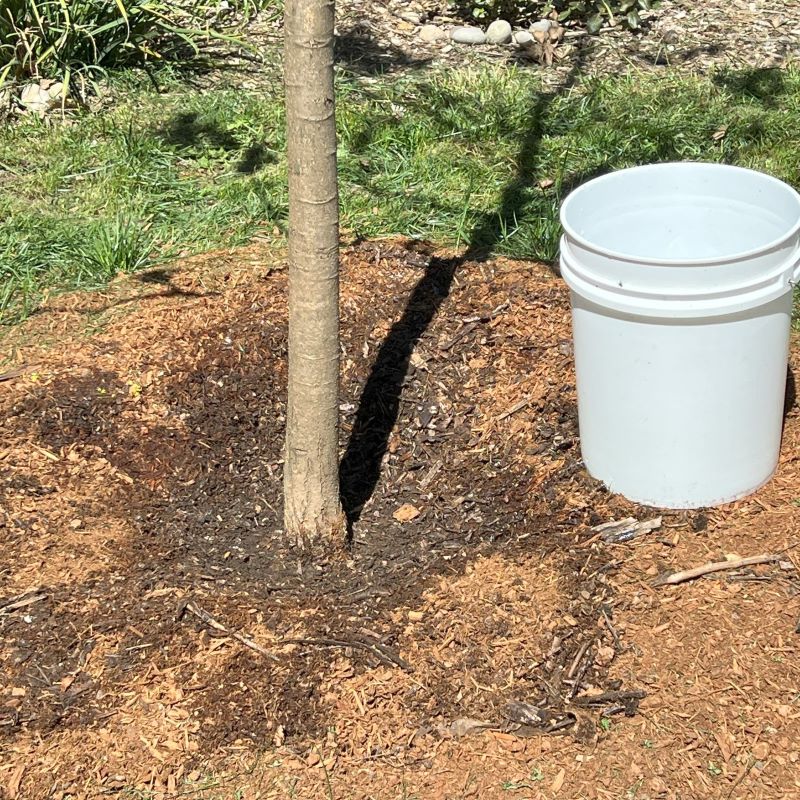
Water slowly so that moisture soaks deeply into the soil and water doesn’t run away from the root zone. Mulching is a great way to hold water in the soil for your new trees. Our videos offer quick tips on how to use slow-drip watering systems such as the five-gallon drilled bucket to water your trees more effectively. Other methods include using watering bags or trickling a hose for 30 minutes (add time as your tree gets older).
Each year, you will want to move your watering source a little farther out from the tree’s trunk, following the “dripline.” This will encourage roots to grow out and away from the tree.
Mulch
It is very important to mulch your tree because mulch reduces evaporation, delivers nutrients, helps prevent the growth of weeds, and protects your tree’s roots from extreme temperatures both hot and cold. Mulching also prevents lawn mowers and string trimmers from getting close to the tree and damaging the trunk, which is the number two cause of tree failure. Mulching is second to watering in importance to the health of newly planted trees.
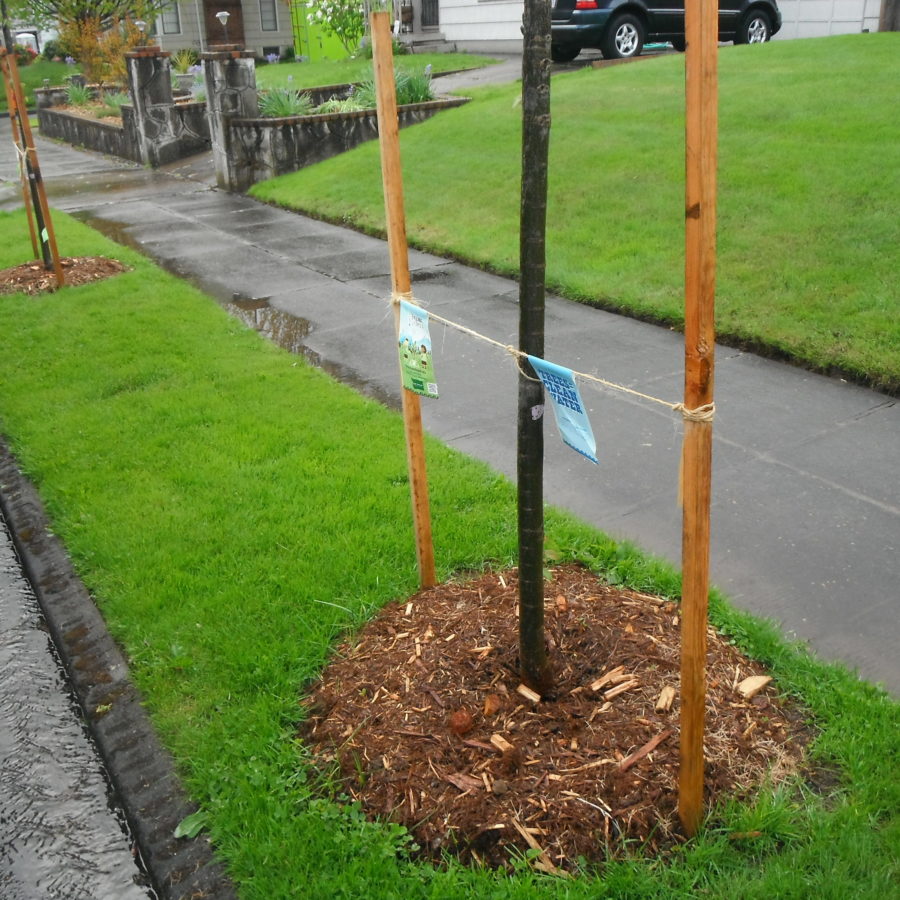
But be sure to pull the mulch away from the bark of the tree in a three-inch radius to prevent fungus growth or infection. Remember the 3-3-3 Rule: 3 inches away from the trunk of the tree, 3 inches deep, in about a 2-3 foot radius. Do not “Volcano Mulch” your tree by piling mulch up against the bark.
Refresh your mulch each summer and expand the mulched area as space allows, to cover the expanding root zone.
Protecting your tree’s roots and trunk
Keep all weeds, grass and other plants 18″ from the trunk of your new tree. Weeds and grass in your tree’s root zone absorb water and nutrients that should be reaching the tree’s roots. They can stress your new trees by creating a tougher establishment zone.
Removing weeds by hand reduces the risk of trunk damage from lawn mowers and string trimmers—a leading cause of urban tree failure. Also be careful to protect the tree’s trunk from car doors, a common source of injury for street trees in particular. The channels that deliver water and nutrients throughout the tree lie just beneath the thin bark.
Pruning
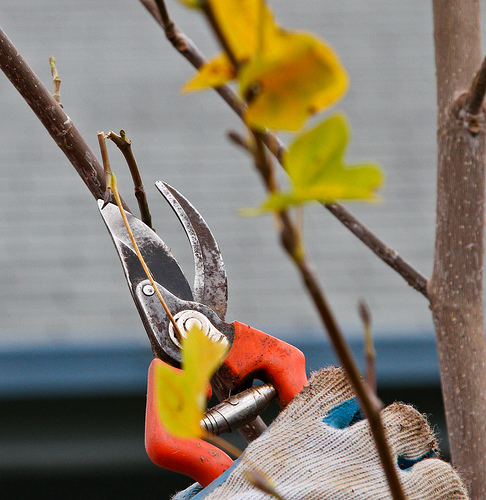
Properly pruning your tree is critical for its health and survival; below is a quick guide to pruning your tree. Interested in a more in-depth pruning guide? Visit our pruning page here.
Pruning basics
A young tree needs all the nutrition it can get from its leaves to develop strong roots, so during the first year after planting, only broken or dead branches should be pruned.
Sucker growth, young shoots growing from the base of the tree, should be removed at ALL times.
In the second year or third year, if the tree is growing well, structural pruning can be considered and is recommended. Street trees in the cities of Portland and Vancouver require a permit through Urban Forestry to prune.
There are several important keys to properly pruning young trees. Remember, you can always hire a certified arborist, and be sure to take a minute to check out these two great resources before you start pruning: Arbor Day Foundation’s Animated Pruning Guide and Ed Gilman’s Developing a Preventative Pruning Program: Young Trees. With proper structural pruning, your tree will truly become an asset, and living legacy, to the rest of the city.
Never top your tree
Topping is the indiscriminate removal of a tree’s branches to stubs and is perhaps the most harmful tree pruning practice known; yet, topped trees are still a common sight.
Not only does topping result in tree stress, decay, hazard and sunburn; it’s also ugly and expensive. Once you top a tree, you resign yourself forever to a maintenance treadmill as your tree rapidly declines and becomes increasingly costly to care for.
Have you recently planted a fruit tree? Here are the basics of fruit tree pruning.
Insects & Disease
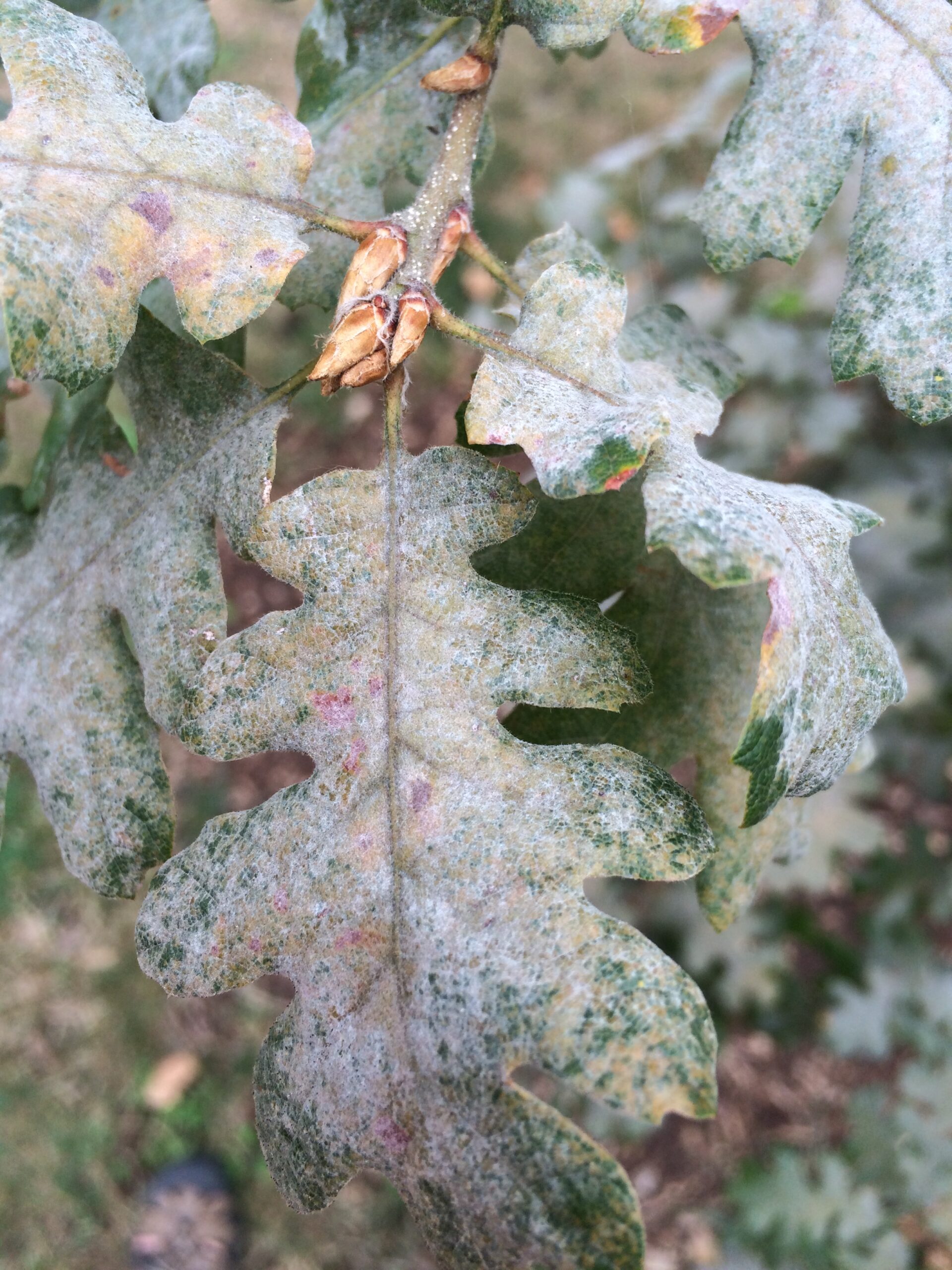
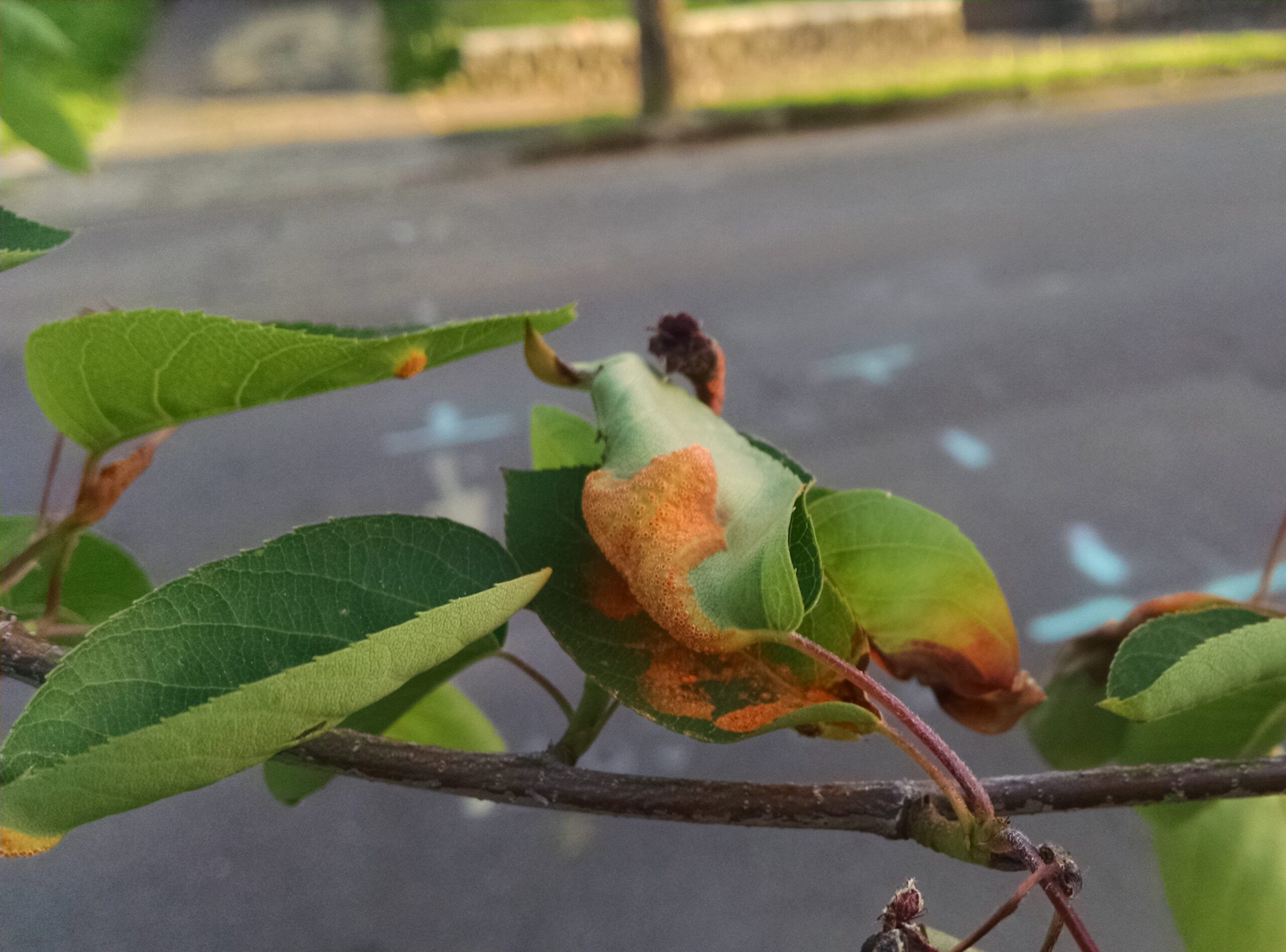
Friends of Trees chooses trees based on their resistance to insect and disease, but if you think your tree has a problem, resources are available to help you find a solution.
Contact your local Extension office. The Cooperative Extension Service is a collaboration between the U.S. Dept. of Agriculture, state and local governments, and land-grant universities. Every U.S. county has an Extension office to deliver research-based information on gardening, agriculture, and pest control to the general public. You can find your local Extension office using a map on the website for the National Pesticide Information Center.
Ask a nursery. Bring a leaf or twig from your tree to your local retail nursery.
Hire an ISA-certified arborist. You can find a list of arborists certified by the International Society of Arboriculture who support Friends of Trees on our arborist page.
Friends of Trees does have ISA-certified arborists on staff, but as a non-profit, our time is dedicated to planting and establishing trees and we unfortunately do not have the capacity to spend the appropriate time to properly diagnose and treat insects and diseases.
Stakes & Twine
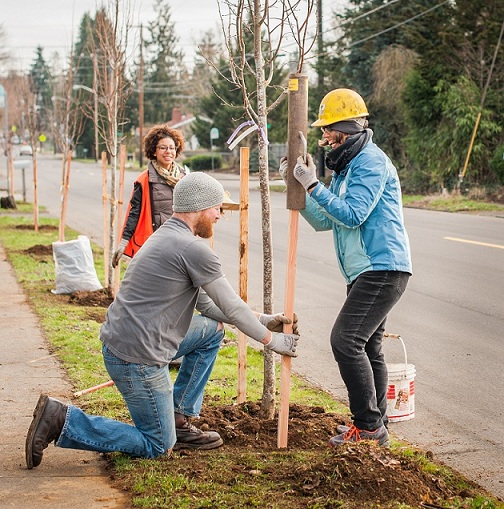
Keep your tree staked and twined for a full year after planting to provide support during storms and to provide protection from foot traffic or car doors. After about a year, twine and stakes should be removed. Loosen any ties if they become tight around the trunk or begin to chafe away the bark. This can cut off the nutrient and water flow to the tree.
If you notice that your tree (planted by Friends of Trees) is leaning or flopping within its first two years in the ground, you can reach out to us at [email protected]. We’ll add you to our list of trees to fix.
Feeling Stumped?
Feel free to give us a call at 503-595-0212 or shoot us an email at [email protected] with your question or a description of your problem, along with a photo and your street address. We’ll do what we can to help! You can also find a lot more information in these blog posts about tree care.
Didn’t plant your tree with Friends of Trees? We’d love to help, but as a non-profit our capacity is limited to supporting tree planters who participate in our planting program. We recommend contacting your municipality’s urban forestry department.